Types of Water Well Drilling Methods
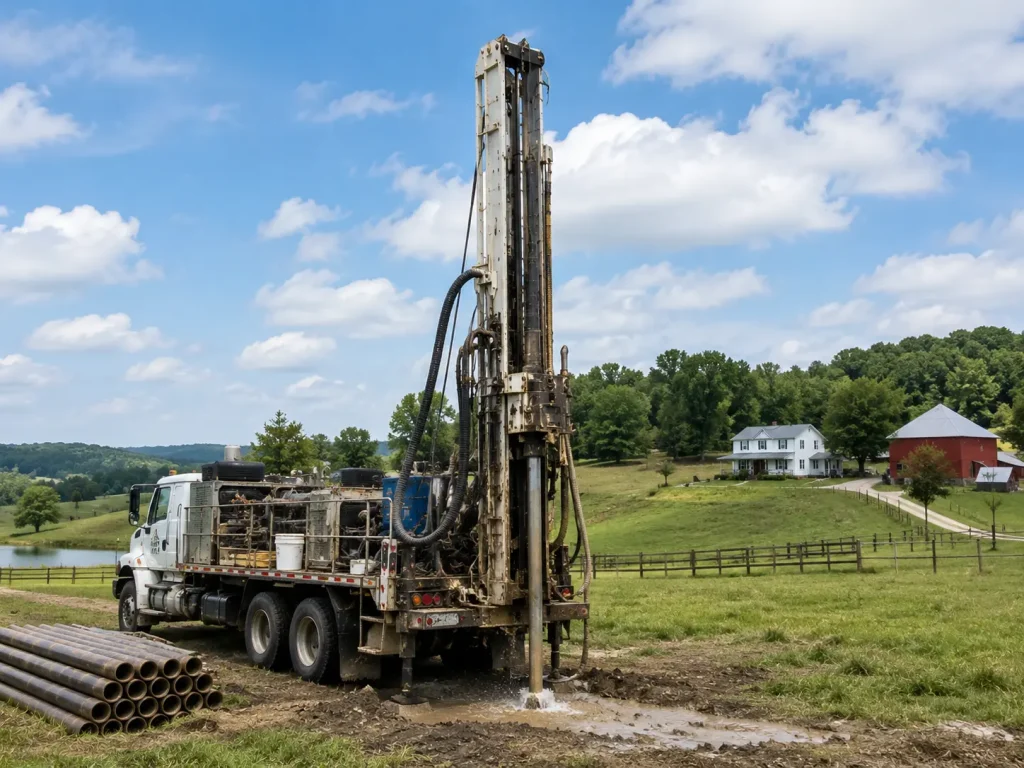
Different geological formations require different drilling methods. Learn how air rotary, direct rotary, DTH hammer, mud rotary, and cable tool drilling work – and why the right method depends on the actual conditions beneath your property.
The drilling method determines how the borehole is constructed. The drilling location determines where the subsurface is tested. Before choosing the final drilling location, a groundwater site assessment can provide additional information about possible groundwater conditions and help compare potential well locations.
Why Water Wells Are Drilled in Different Ways
There is no single drilling method that is best for every property.
The most appropriate method depends on:
Geological formation
Depth of the proposed well
Borehole diameter
Stability of the formation
Groundwater inflow
Casing requirements
Site access
Equipment availability
Local construction requirements
Contractor experience
The qualified or properly licensed drilling contractor should make the final drilling-method decision.
Air Rotary Drilling
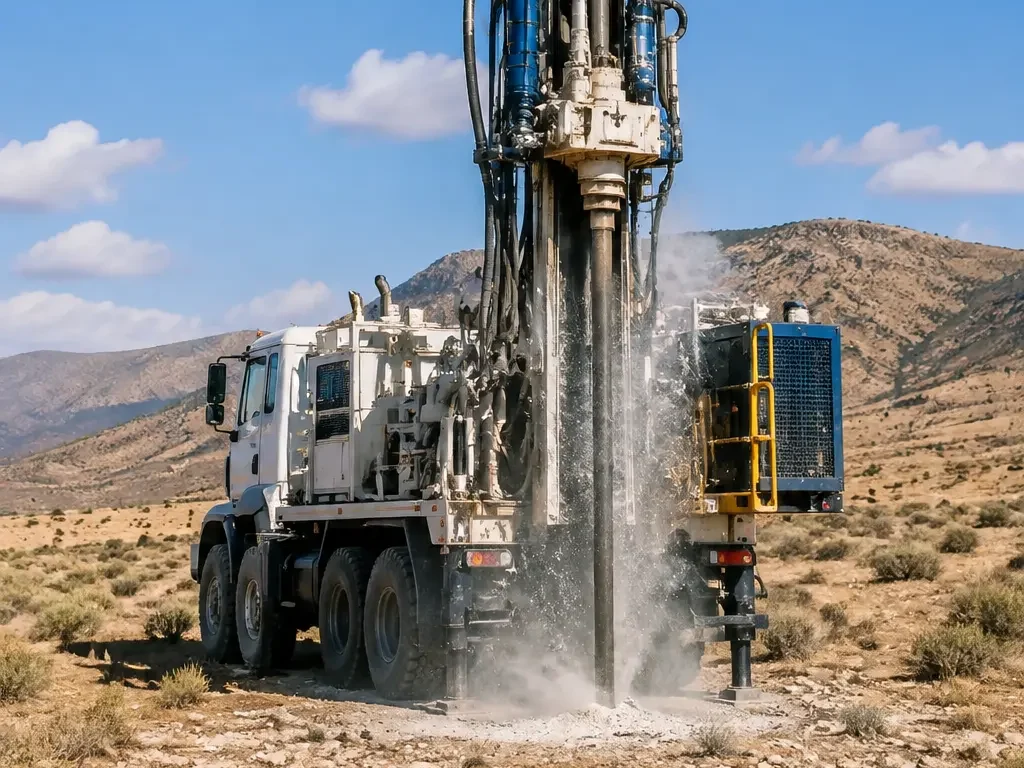
Air rotary drilling uses compressed air as the primary circulation medium. Air is pumped down through the drill pipe and exits near the drill bit. The returning air moves upward through the borehole and carries rock cuttings to the surface.
May Be Useful For
- Competent bedrock
- Limestone
- Sandstone
- Granite
- Basalt
- Other stable formations
Main Advantages
- Relatively fast penetration
- Continuous removal of cuttings
- Good observation of formation changes
- Reduced dependence on drilling mud in stable rock
- Efficient borehole cleaning
Main Limitations
- Loose formations may require casing
- High groundwater inflow can affect air circulation
- Large compressors may be required
- Dust and noise must be controlled
- Site access must accommodate drilling equipment
Direct Rotary Drilling
Direct rotary drilling uses a rotating drill bit together with continuous circulation of drilling fluid. The fluid is pumped down through the drill pipe and returns upward through the annular space carrying drill cuttings to the surface.
May Be Useful For
- Sand
- Silt
- Clay
- Sedimentary formations
- Soft rock
- Moderately hard formations
- Many deeper well applications
Main Advantages
- Relatively high drilling rates
- Continuous cuttings removal
- Drilling fluid can help stabilize the borehole
- Different bits can be used for different formations
- Efficient for many well depths and diameters
Main Limitations
- Drilling fluid requires careful management
- Formation plugging can occur if fluid is poorly managed
- Large equipment may require significant access
- Accurate sample depth may require specialized procedures
- Equipment and maintenance can be costly
Internal link: /direct-rotary-drilling/
Cable Tool Drilling
Cable tool drilling is a percussion method. A heavy drill string is repeatedly raised and dropped into the borehole. Water may be added to create a slurry, and loosened material is removed using a bailer or sand pump.
May Be Useful For
- Sand
- Gravel
- Cobbles
- Boulder deposits
- Fractured rock
- Mixed formations
- Certain lost-circulation conditions
- Unstable ground
Main Advantages
- Can operate across many formation types
- Allows good observation of formation changes
- Casing can follow drilling closely
- Requires relatively little circulating fluid
- May perform well in difficult boulder-rich formations
Main Limitations
- Usually slower than modern rotary methods
- Casing requirements may increase cost
- Deep casing may be difficult to retrieve
- Experienced cable tool drillers may be less common
Compare the Main Water-Well Drilling Methods
| Factor | Air Rotary | Direct Rotary | Cable Tool |
| Main action | Rotation + air circulation | Rotation + fluid circulation | Repeated percussion |
| Cuttings removal | Compressed air | Drilling fluid | Bailer / sand pump |
| Hard rock | Very good | Depends on system | Possible but slower |
| Loose formations | May require casing | Often very good | Good with advancing casing |
| Drilling speed | High | Generally high | Generally slower |
| Borehole support | Limited unless cased | Drilling fluid helps support | Casing can follow closely |
| Fluid use | Low | Moderate to high | Relatively low |
| Formation observation | Good | Requires care | Very good |
| Equipment size | Often large | Often large | Some rigs smaller |
| Typical strength | Competent rock | Loose/mixed formations | Difficult/mixed formations |
This comparison is general. Actual method selection should be based on site-specific geology and the drilling contractor’s experience.
What Is the Best Water-Well Drilling Method?
There is no universally best water-well drilling method. The right method depends on what the drilling contractor expects to encounter beneath the property.
Hard Competent Rock
Air rotary or DTH hammer drilling may provide efficient penetration.
Loose Sand or Clay
Mud/direct rotary drilling may provide better borehole support.
Boulder-Rich or Mixed Ground
Cable tool drilling may offer advantages in some situations.
Changing Formations
A drilling contractor may use more than one technique during the same project.
Drilling Methods Can Be Combined
Some modern water-well drilling rigs can use different circulation systems or drilling tools as conditions change.
- Use drilling fluid through unstable overburden.
- Install casing through loose material.
- Switch to air rotary drilling after reaching stable bedrock.
Geology Comes First
Important underground conditions include:
- Hardness
- Grain size
- Fractures
- Boulder content
- Formation stability
- Groundwater inflow
- Cavities
- Clay content
- Permeability
Loose sand may collapse without support, hard granite may require high-impact drilling, large boulders can slow certain rotary methods, and high groundwater inflow can affect air drilling.
Drilling Method and Drilling Location Are Different Decisions
The drilling method determines how the borehole is constructed. The drilling location determines where the subsurface is tested.
Before choosing the final location, property owners may benefit from reviewing:
- Nearby well records
- Geological information
- Property access
- Potential drilling locations
- Groundwater survey information
Evaluate the Groundwater Before Choosing Where to Drill
WaterFind USA provides pre-drilling groundwater site assessments that may help compare potential aquifer depth, potential aquifer thickness, relative groundwater conditions, different survey locations, and possible drilling areas. Survey information is interpreted data. Actual geological and groundwater conditions are confirmed by drilling.
Choose the Location Before the Contractor Chooses the Drill Bit
The drilling contractor determines how to construct the well. WaterFind USA can help you gather additional groundwater information before choosing where that drilling should begin.
What Information Helps the Drilling Contractor?
- Groundwater survey results
- Nearby water-well records
- Expected geological formations
- Required well depth
- Intended water use
- Access conditions
- Borehole diameter
- Local regulations
The contractor can use this information when selecting:
- Drill rig
- Drill bit
- Circulation system
- Casing
- Well screen
- Completion method
Drilling Is Only One Part of the Water-Well Project
- Casing installation
- Well-screen installation
- Sealing
- Filter pack
- Well development
- Pump testing
- Pump installation
- Water-quality testing
A successful well project depends on appropriate construction and testing, not simply the drilling method used.
Why Well Development Matters
- Drilling fluid
- Fine sediment
- Loose formation material
- Drilling debris
Well development can also improve groundwater flow between the aquifer and the well.
How Is Well Yield Confirmed?
- Pumping rate
- Drawdown
- Water-level recovery
- Sustainable yield
- Aquifer response
Actual GPM should be based on testing rather than a drilling observation alone.
Frequently Asked Questions
What drilling method is best for different geological conditions?
The most suitable water-well drilling method depends on the formation beneath the property and the experience of the drilling contractor. Direct rotary drilling is widely used because it can provide efficient drilling in many formations, while air rotary and DTH hammer drilling are commonly used for competent hard-rock conditions. Direct or mud rotary drilling may be effective in loose formations such as sand and gravel, while cable tool drilling can still be useful in difficult or mixed geological conditions.
Can the drilling method guarantee a successful water well?
No. The drilling method only determines how the borehole is constructed. It does not guarantee that the chosen drilling location will encounter a productive aquifer or produce a specific amount of water. Actual well performance depends on the groundwater conditions, geology, well construction, development, and pump testing.
Is cable tool drilling still used, and when is it useful?
Yes. Although cable tool drilling is generally slower than modern rotary methods, it remains useful in certain conditions such as mixed formations, gravel, cobbles, boulders, and difficult geological environments where traditional percussion drilling provides advantages.
Who decides which drilling method should be used?
The qualified or properly licensed drilling contractor responsible for constructing the well makes the final decision. The contractor considers factors such as geology, expected formation conditions, well depth, site access, equipment, and project requirements when selecting the most appropriate drilling method.
FIND US NOW!
We are based in Peris Valley, California. Email us today to discuss your project, request a customized estimate, and received a DocuSign Service Agreement to get started.
Toll-Free: +1 (877) 388-7388
Canadian Cell : +1 (403) 845-6676
Email: waterfind333@gmail.com