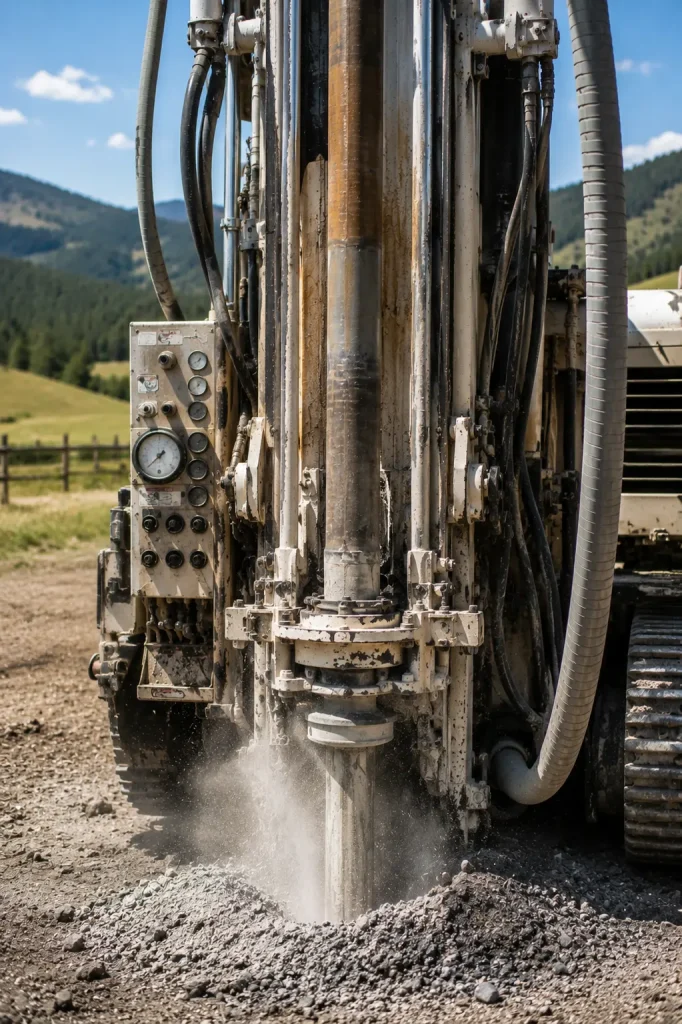
Air Rotary Drilling for Water Wells
Understand how compressed-air and down-the-hole hammer drilling work in hard rock, when these methods may be appropriate, and why the site should be evaluated before drilling begins.
Air rotary drilling uses compressed air to power the drilling process and carry rock cuttings out of the borehole. It is commonly considered for water wells drilled into competent formations such as granite, basalt, limestone, and dolomite.
The right drilling method depends on the overburden, formation stability, expected well depth, groundwater conditions, site access, equipment requirements, and the amount of water needed. A pre-drilling groundwater survey can help property owners compare potential drilling locations before committing to a borehole.
What Is Air Rotary Drilling?
Air rotary drilling is a circulation method that uses compressed air instead of drilling mud to remove cuttings from the borehole.
Compressed air travels down the drill pipe and exits near the drill bit. The returning air moves upward through the space between the drill pipe and the borehole wall, carrying rock fragments, dust, and other cuttings to the surface.
This continuous airflow helps keep the bottom of the borehole clear and allows the drilling crew to observe changes in the rock formation as drilling progresses.
Air rotary drilling is generally most useful in semi-consolidated or consolidated formations. Loose sand, unstable gravel, and collapsing overburden may require temporary casing, foam, water, drilling fluid, or a different drilling method before competent rock is reached.
Important: Air drilling constructs the borehole. It does not independently locate groundwater or guarantee that a well will produce a specific amount of water.
How Air Drilling Works
A typical air drilling process may include the following steps:
- The property, expected geology, access, and project requirements are evaluated.
- A drilling contractor selects the appropriate rig, compressor, drill bit, and casing plan.
- Compressed air is sent through the drill pipe toward the bottom of the borehole.
- The drill bit rotates or strikes the formation, depending on the drilling system.
- Returning air carries the rock cuttings to the surface.
- The drilling crew observes formation changes and groundwater entering the borehole.
- The completed well is developed and tested to determine sustainable yield and water quality.
The exact procedure depends on the formation, equipment, local requirements, and conditions encountered during drilling.
Direct Rotary Air Method
In direct rotary air drilling, the drill string rotates a drill bit while a compressor sends air through the drill pipe.
The compressed air exits near the drill bit and carries the loosened rock cuttings upward to the surface. Continuous circulation helps clean the borehole and allows the drilling crew to monitor changes in the formation.
Direct rotary air drilling may be considered where the formation is stable enough to keep the borehole open and where compressed air can circulate effectively.
Loose or collapsing material near the surface may still require casing or another drilling method before the drill reaches competent rock.
In direct rotary air drilling, the drill string rotates a drill bit while a compressor sends air through the drill pipe.
The compressed air exits near the drill bit and carries the loosened rock cuttings upward to the surface. Continuous circulation helps clean the borehole and allows the drilling crew to monitor changes in the formation.
Direct rotary air drilling may be considered where the formation is stable enough to keep the borehole open and where compressed air can circulate effectively.
Loose or collapsing material near the surface may still require casing or another drilling method before the drill reaches competent rock.
Down-the-Hole Hammer Method
A down-the-hole hammer, also called a DTH hammer, places a pneumatic hammer close to the bottom of the borehole.
The hammer repeatedly strikes the rock while the drill string rotates. This combination of percussion and rotation breaks dense rock into smaller pieces, which are then carried to the surface by compressed air.
DTH hammer drilling can provide efficient penetration in hard formations such as:
- Granite
- Basalt
- Dolomite
- Limestone
- Other dense, competent rock formations
The method requires adequate compressor capacity, suitable equipment, experienced operators, and proper control of dust, noise, air pressure, cuttings, and groundwater inflow.
A down-the-hole hammer, also called a DTH hammer, places a pneumatic hammer close to the bottom of the borehole.
The hammer repeatedly strikes the rock while the drill string rotates. This combination of percussion and rotation breaks dense rock into smaller pieces, which are then carried to the surface by compressed air.
DTH hammer drilling can provide efficient penetration in hard formations such as:
- Granite
- Basalt
- Dolomite
- Limestone
- Other dense, competent rock formations
The method requires adequate compressor capacity, suitable equipment, experienced operators, and proper control of dust, noise, air pressure, cuttings, and groundwater inflow.
When Air Drilling May Be a Good Fit
Air rotary drilling may be considered when:
- The target interval consists of competent bedrock or another stable formation.
- The drilling contractor has suitable air drilling equipment and adequate compressor capacity.
- Surface overburden can be stabilized using casing or another appropriate method.
- Dust, noise, air discharge, and rock cuttings can be managed safely.
- The property provides sufficient access for the drilling rig and support equipment.
- Groundwater inflow remains compatible with air circulation.
- Local well-construction requirements allow the proposed method.
- The method matches the expected depth, borehole diameter, and water-supply objective.
The final method decision should be made by the properly qualified or licensed water-well contractor responsible for constructing the well.
Main Benefits of Air Rotary Drilling
Efficient Penetration in Hard Rock
Air rotary and DTH hammer systems can provide efficient penetration in many competent rock formations when equipment and site conditions are suitable.
Continuous Removal of Cuttings
Compressed air carries rock fragments and dust away from the drill bit, helping keep the bottom of the borehole clear.
Observation of Formation Changes
The drilling crew can examine the cuttings brought to the surface and observe changes in rock type as drilling progresses.
Reduced Use of Drilling Mud
Air drilling may require little or no drilling mud within a stable hard-rock interval. This can reduce mud-related handling and cleanup.
Observation of Groundwater Inflow
The crew may observe groundwater entering the borehole during drilling. This can provide useful field information, although it does not replace proper well development and pump testing.
Faster Borehole Cleaning
Continuous airflow can help remove cuttings efficiently and reduce the buildup of material around the drill bit.
Important Limitations of Air Drilling
Unstable Formations
Loose sand, unstable gravel, and collapsing formations may not remain open under air circulation. Temporary casing, foam, water, or a fluid-based drilling method may be required.
High Groundwater Inflow
Large amounts of groundwater entering the borehole can reduce the effectiveness of compressed-air circulation.
Compressor and Equipment Requirements
Air drilling may require a large compressor, suitable drill pipe, specialized bits, dust-control measures, and sufficient space for the drilling operation.
Dust and Noise
The discharge of air and cuttings may create significant dust and noise. The contractor must plan for safe discharge, worker protection, and nearby properties.
Site Access
Large drilling equipment may have difficulty reaching steep, wet, narrow, soft, or heavily obstructed properties.
No Guaranteed Water Yield
Air drilling does not guarantee that the borehole will encounter a productive aquifer or produce a particular flow rate.
Final sustainable yield must be determined through proper well development and pump testing. Water quality should be confirmed through appropriate laboratory testing.
Air Drilling vs. Mud Rotary and Cable Tool Drilling
No single drilling method is appropriate for every property. The drilling contractor may use one method or combine methods according to the formations encountered.
| Drilling method | Conditions where it may be considered | How it works | Important consideration |
|---|---|---|---|
| Direct rotary air | Stable or competent rock formations | A rotating bit breaks the formation while compressed air carries cuttings to the surface | Loose or collapsing overburden may require casing or another circulation method |
| Down-the-hole hammer | Dense hard rock such as granite, basalt, limestone, or dolomite | A pneumatic hammer strikes the rock while the drill string rotates | Requires adequate compressor capacity and careful management of dust, noise, air pressure, and groundwater inflow |
| Mud rotary | Unconsolidated, unstable, or collapsing formations and many deeper-well applications | Drilling fluid supports the borehole and transports cuttings to the surface | Requires fluid management, settling, cleanup, and proper well development |
| Cable tool drilling | Selected consolidated and unconsolidated formations | A heavy drilling tool is repeatedly lifted and dropped to break or loosen the formation | The process may be slower, and casing advancement depends on the formation and equipment |
A professional driller should select the method based on the actual subsurface conditions, local construction requirements, equipment availability, expected depth, and project goals.
Why Evaluate Groundwater Before You Drill?
The drilling method determines how the borehole will be constructed. It does not determine where the most promising groundwater target is located.
Drilling without first comparing potential locations can expose a property owner to unnecessary financial risk, particularly when the expected well is deep or the geology is uncertain.
A pre-drilling evaluation may include:
- Reviewing nearby water-well records
- Comparing reported well depths and yields
- Studying available geological information
- Evaluating property access and possible drilling locations
- Completing a site-specific groundwater survey
- Estimating the depth and thickness of possible water-bearing zones
- Identifying a promising location for further investigation through drilling
WaterFind USA uses advanced seismic methods and available well information to support pre-drilling site evaluation. Survey findings are estimates. They do not replace drilling, well development, pump testing, laboratory water analysis, permitting, or the professional judgment of the contractor responsible for constructing the well.
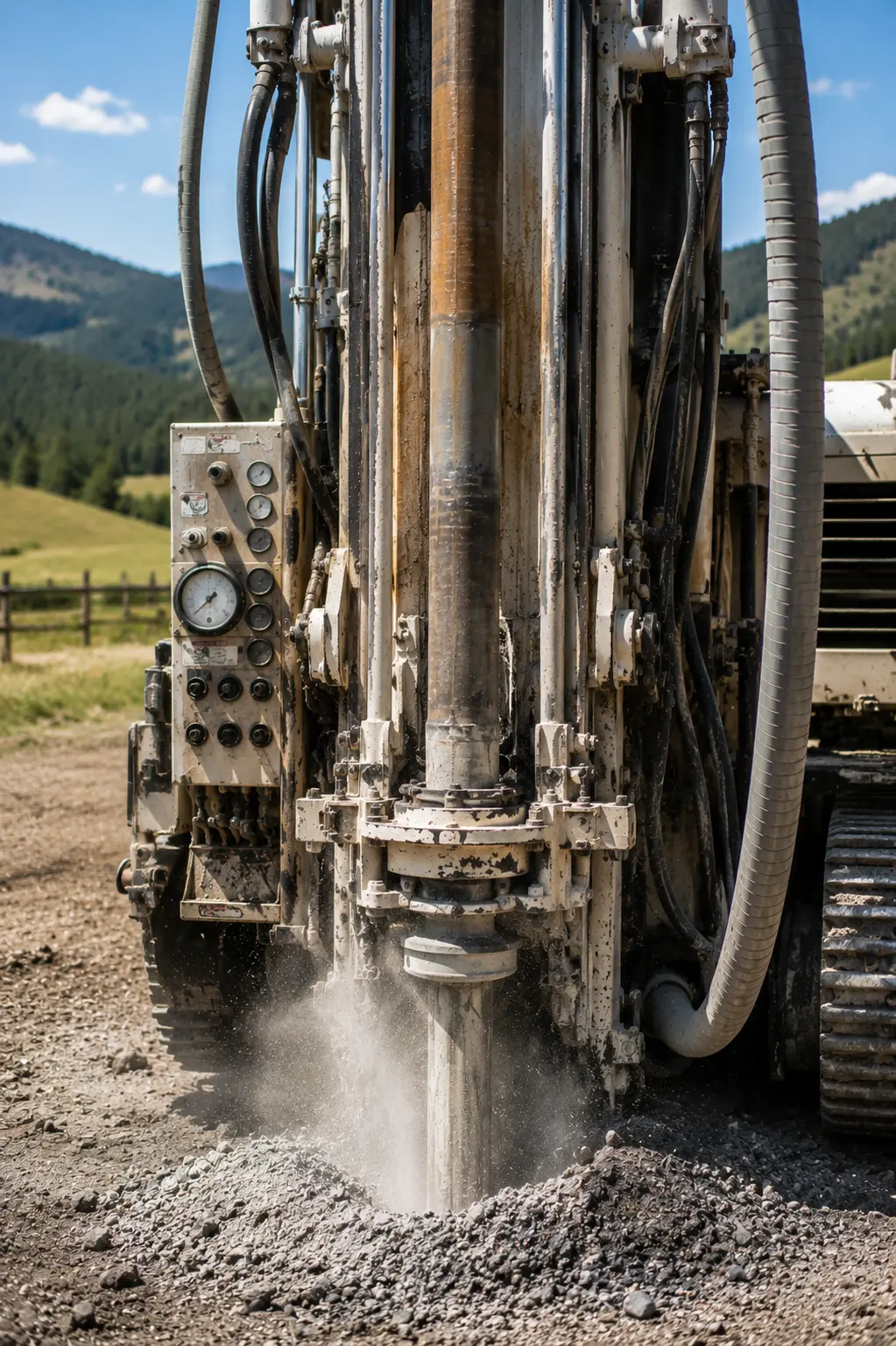
Evaluate the Site Before You Choose the Final Drilling Location
Planning a domestic, agricultural, commercial, or irrigation well? A groundwater site assessment can help you compare potential drilling locations before a drilling contractor mobilizes equipment to the property.
How WaterFind USA Supports Your Project
WaterFind USA supports pre-drilling decision-making through groundwater surveys, available well-record research, and site evaluation.
The purpose of the evaluation is to help property owners and project managers identify a promising drilling location and better understand the possible depth and thickness of groundwater-bearing formations.
The drilling contractor responsible for the completed well should review the survey information, property conditions, expected geology, local requirements, equipment options, casing requirements, and project objectives before selecting the final drilling method.
Contact WaterFind USA to confirm current service availability and any drilling-coordination options available for your location.
WaterFind USA Service Area
Winter Service Routes
Current winter service areas include:
- California
- Colorado
- Kansas
- Nevada
- Utah
Summer Service Routes
Current summer service areas include:
- Washington
- Idaho
- Montana
- Colorado
- Wyoming
Related Water-Well Planning Resources
Continue planning your water-well project with these resources:
- Learn how WaterFind evaluates groundwater before drilling.
- Review typical factors that affect water-well drilling costs.
- Compare direct rotary drilling methods.
- Learn how cable tool drilling works.
- Review groundwater survey pricing and seasonal service areas.
- Check available state water-well records before selecting a drilling location.
Frequently Asked Questions
Is air drilling suitable for every water well?
No. Air drilling is generally most suitable in stable, semi-consolidated, or consolidated formations.
Loose sand, unstable gravel, and collapsing material may require casing, drilling fluid, foam, water, or another drilling method.
Does air drilling guarantee that the well will find water?
No drilling method can guarantee that a particular borehole will encounter enough groundwater for the intended use.
A groundwater survey and review of nearby well records can help identify a promising drilling location, but drilling and testing are still required to confirm actual conditions.
What is the difference between direct rotary air drilling and a DTH hammer?
Direct rotary air drilling uses a rotating drill bit and compressed-air circulation to break the formation and carry cuttings to the surface.
A DTH hammer adds rapid pneumatic percussion close to the bottom of the borehole while the drill string rotates. This can improve penetration in dense hard rock.
Is air drilling better than mud rotary drilling?
Neither method is universally better.
Air drilling is often considered in stable, competent rock. Mud rotary drilling may be more appropriate in loose, unstable, unconsolidated, or collapsing formations.
The appropriate method depends on the actual site conditions and the judgment of the drilling contractor.
Can an air drill determine how much water a well will produce?
The drilling crew may observe water entering the borehole, but this does not confirm the well’s final sustainable yield.
A completed well must be properly developed and pump tested to determine how much water it can sustainably produce.
How much does air rotary drilling cost?
The cost depends on factors including:
- Mobilization distance
- Required well depth
- Borehole diameter
- Casing requirements
- Formation hardness
- Overburden conditions
- Compressor and equipment requirements
- Site access
- Well development
- Pump testing
- Local permitting and construction requirements
Request a project-specific estimate from the contractor who will perform the drilling.
How can a groundwater survey help before drilling?
A groundwater survey can help compare possible drilling locations and estimate the depth and thickness of potential groundwater-bearing zones.
The findings can support a more informed drilling decision, but they remain estimates until the borehole is drilled and tested.
FIND US NOW!
We are based in Perris Valley, California. Email us today to discuss your project, request a customized estimate, and received a DocuSign Service Agreement to get started.
Toll-Free: +1 (877) 388-7388
Canadian Cell : +1 (403) 845-6676
Email: waterfind333@gmail.com